A Family Garden – Merton
A Garden Designed for the Whole Family
Client Profile
A busy couple with two young children and a cat who moved into a fully renovated semi-detached hi-spec house two years ago.
Having settled in the new area, they are now looking to revamp their garden to the same standards as the house.
The Challenges
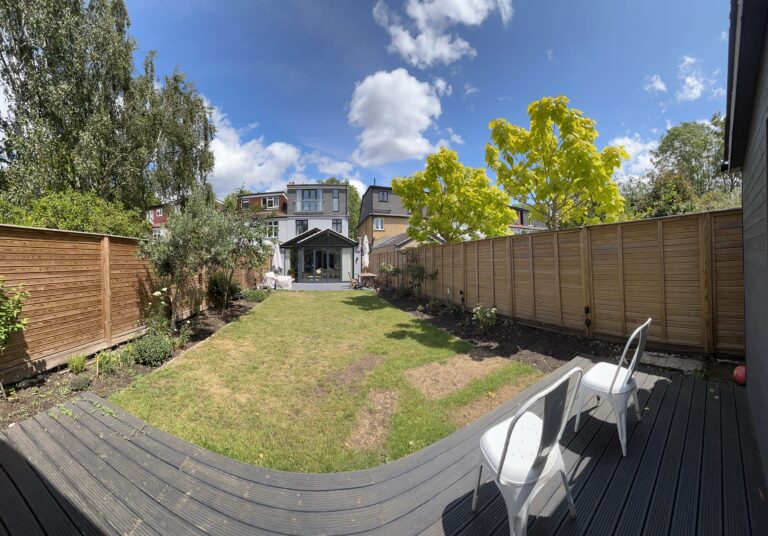
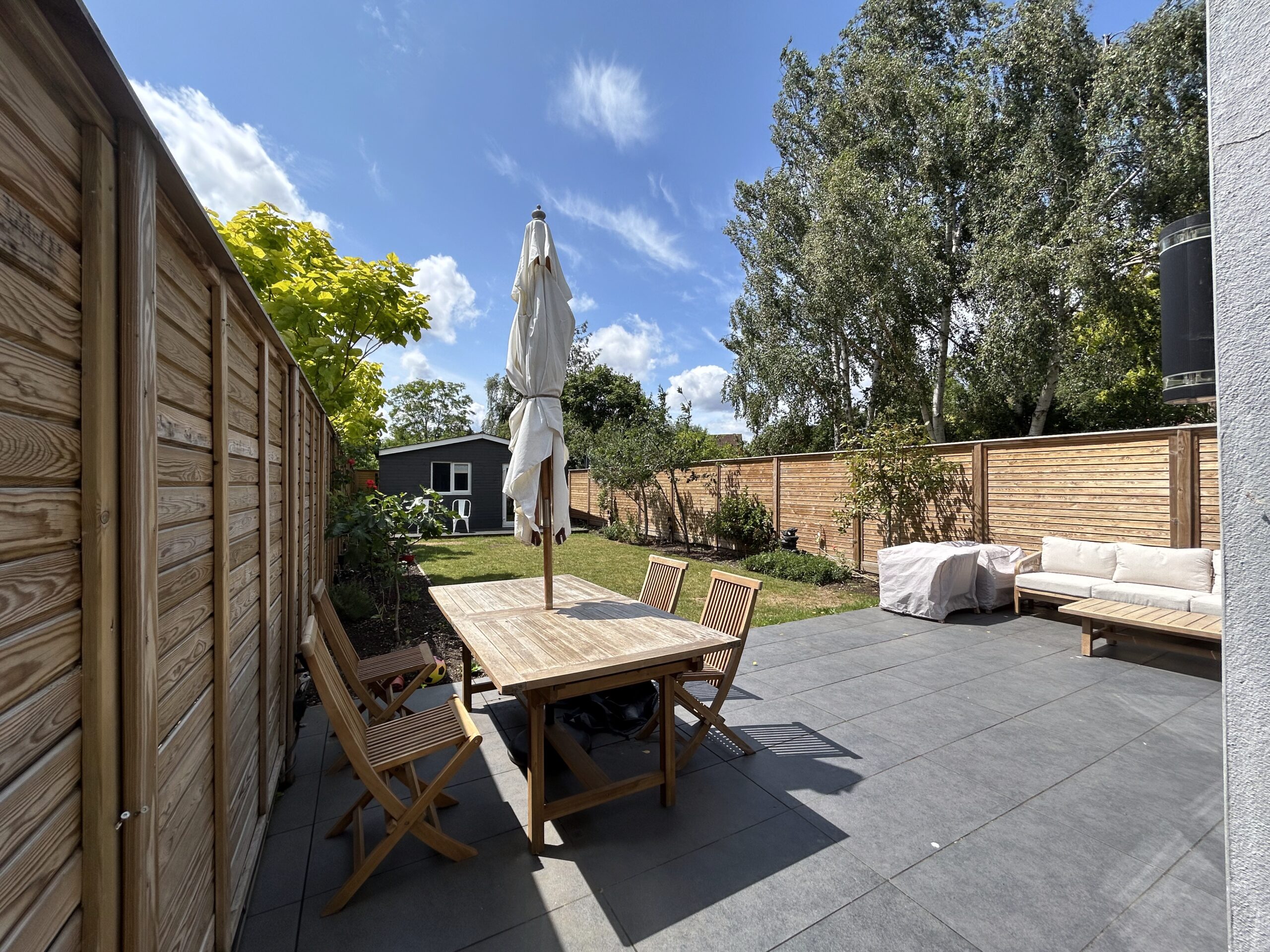
The garden has large proportions for a postcode in the southwest of London and receives plenty of sunlight due to its southwest-facing position. Yet, it is unattractive due to its standard box format, with two rows of borders along the fence and a rectangular grass in the middle. A myriad of barriers are stopping the couple from maximising the benefits of the garden:
- Time: like most couples with young families, any free time goes to playing with the kids. They would love to have a garden with densely planted borders, without sparse or scattered bushes, and trees with shade to relax under. But they do not have time to do any planning, let alone planting or even minimal maintenance and watering.
- Multiple uses: football fanatics, the boys of the house would be happy extending the lawn at the expense of the borders. In contrast, the girls would prefer to prioritise enjoying the greenery that a garden can offer. The conflicting interests create a paralysis in any decision to change the status quo.
- Unknown materials buried in the soil: there are rectangular spots with yellow patches where the grass does not grow. It is suspected that the builder might have buried refurbishment refuse in parts of the garden.
- Dull boundaries: despite high-quality horizontal wooden fencing panels, the garden lacks any notable points of interest. At the bottom of the garden, the studio, with grey wood cladding, contrasts with the high-specs in the house, which features beautiful bi-folds opening onto the garden.
- Tree envy: neighbours all around have mature trees in their gardens. Despite a small cherry tree and an olive tree, the garden looks bare compared to the gardens around it.
- Furniture layout: the positioning of the patio furniture is guided by the placement of the football goal nets, leaving a big gap in the middle. The decking in the studio is sub-utilised with a couple of chairs.
- Lighting: the builders have added lighting on alternating concrete fence posts. If too many plants are planted, then the lighting will be obscured.
Our Approach: Tier 1 – A Garden for for Everyone
Creating a vision
Zoning
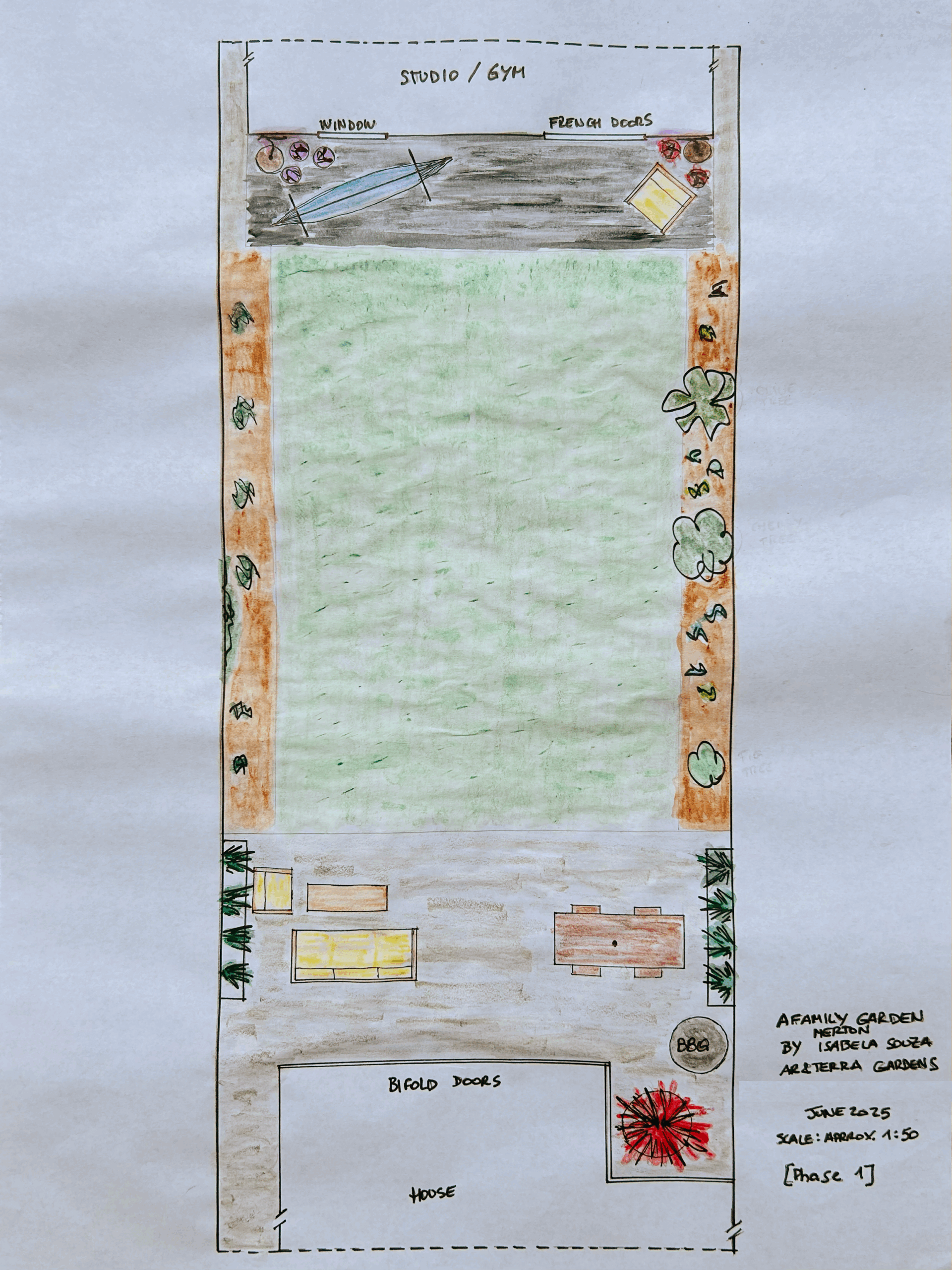
- Reclaim family space and negotiate a compromise between the football area, spaces dedicated to the whole family and friends and spaces dedicated to relaxation.
- Integrate the garden and built areas by using pots in the patio and decking areas, with climbers and trees in pots to create green living walls near the boundaries.
- Enhance the sense of responsibility and shared ownership by assigning tasks for garden care to everyone. Kids could help with weeding and planting. Dedicated borders for each child and one for the parents are also a fun way to interact with the garden.
Low maintenance
- Change the lawn mowing pattern: mow every 2-3 weeks, instead of every week. Adjust the cut height according to the season. In Spring/Summer, cut higher (5-7 cm) to support flowering plants. In Autumn/Winter: cut slightly shorter (4 cm) to prevent moss, but avoid over-mowing. Introduce tapestry lawn varieties to reduce the need for mowing.
- Irrigation: provide the plants with help during droughts using a low-pressure drip irrigation system. Some models are connected to a weather forecast and will not turn on if there is a forecast of rain. You just have to install the system, and it will do everything for you.
- Choose resilient plants that are suitable for both drought and flooding conditions.
- Beauty in the chaos of nature: Embrace the trend of shifting the mindset regarding which plants are considered weeds. Allow whatever seeds are brought by the wind or birds to grow. Do not use pesticides. If necessary, weed the garden manually.
Strategic Roadmap
Recommendation of a phased approach, starting with quick wins, that will provide excitement for the realisation of the full garden potential over the years. It will also allow the garden to change according to the family’s life stages and needs, leaving more structural changes for after the kids have grown up.
Phase 1: Focus on the patio and decking areas
- Add colour with pots and cushions.
- Set up a hammock support to provide a relaxing zone by the studio.
- Invert the layout of the patio furniture, with the sofa on the right and the table with chairs on the left. Experiment with placing furniture facing the garden.
- Start the screening of the boundaries with bamboo, jasmine, and wisteria.
- Add a fern tree, or banana tree, in a large pot in the patio recess window.
- Assemble an irrigation system to water the pots and the borders.
- Create tapestry lawn patches on the grass.
- Build a small greenhouse to experiment with growing from seeds.
- Add an outdoor shower as an option to the “hose showers”.
- Complement the existing lighting with portable lighting to give the garden a magical glow on late spring and autumn nights.
Phase 2: Focus on greening the fence and installing raised beds on top of the yellow grass patches
- Plant edibles and pollinator-friendly plants together for a mixed garden in the raised beds.
- Add a water feature as a point of interest that attracts and supports a variety of wildlife. Options include: raised ponds in a pot, wildlife ponds or drainpipe wetlands.
- Boost the borders with resilient and easy-to-grow plants, such as lavender, Erysimum and agapanthus.
- Use ornamental grasses that will not be damaged by ball games.
- Use clusters of tall bulbs, such as allium, to add interest of varied height.
- Finalise the screening of the boundaries with jasmine.
Phase 3: Increase the number of trees
First, conduct a soil investigation to assess the costs of planting trees (refuse material may need to be removed) versus creating new raised beds for the trees on top of them (no need to remove anything that is buried). Then, plant medium-sized statement trees along the borders and adjust the permanent lighting positioning.
- Multi-stem ginkgo biloba trees change colours during the year and add vibrancy.
- Acer trees are associated with peace, longevity, and beauty. The intricate patterns of their leaves represent balance and harmony.
- Dogwood (Cornus sanguinea) has bold orange winter stems that provide changing interest throughout the year.
Phase 4: Reassess the garden needs
After the kids grow, reconsider the garden’s use. An option is to replace the lawn with trees, ferns and grasses to create an urban temperate rainforest instead of a mini football pitch.
Client’s Words
“Isabela nailed it. The Tier 1 Consultation was thorough, thoughtful, and tailored perfectly to our needs. It didn’t just offer ideas; it gave us a long-term plan that grows with our family. We can’t wait to see our garden evolve over the years, and we’re so grateful for the expertise and passion that went into this project. Highly recommend!”
Key Insights
- Dream big, start small.
- The garden is already a place for fun; it can also become a source of enjoyment, such as planting edibles and watching the growth of seeds in the greenhouse.
- Family needs change over time. Plan for the garden to change according to the different stages of family life.