Gentle Custodianship of Nature
The art of the light touch interventions
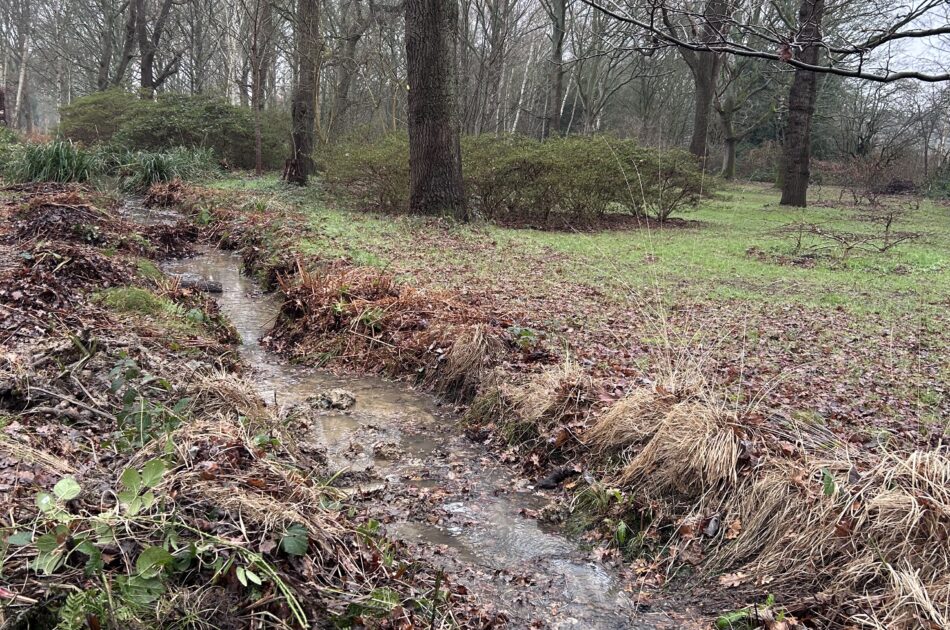
This stream in Isabella Plantation, Richmond Park, might look wild at first glance. Look closely, and you will be able to spot the careful work of ten volunteers (including me!).
Clearing selectively to prevent stagnation, the work is a direct lesson in gentle custodianship. It embodies a core principle of true naturalistic planting: this is not passive abandonment, but an active and thoughtful partnership. It is a curated ecology, where human intervention is applied with humility to help an ecosystem express its fullest, most balanced potential.
For the gardeners and volunteers here, custodianship means holding this landscape in trust. Left entirely alone, a stream can become choked, its biodiversity simplified. The role of the gentle custodian is to make the small, critical interventions that tip the balance toward greater health, for the ecosystem and for those who find joy in it.
Welcomed companion
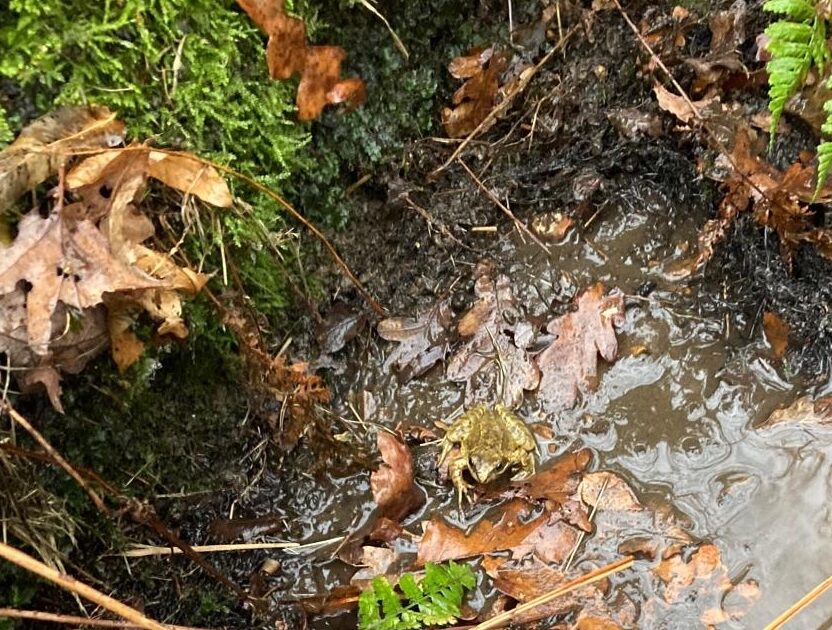
This frog, now a welcome companion at the water’s edge, is a perfect sign of success. Clean, oxygenated water and a balanced habitat are exactly what it needs. Our gentle intervention helped secure its home.
And yet, custodianship also means managing the unexpected. On a different part of the stream, a rat was scurrying along the bank. A visitor for whom I have no picture, and whose presence is less welcome.
These two companions are a reminder that our partnership with nature isn’t always purely scenic. It involves complex choices about which species we want to thrive, and which ones we would rather control. Always aiming for an equilibrium that supports native wildlife and public enjoyment.
This is the nuanced reality of naturalistic planting. It requires deep observation and understanding, knowing when to act and when to step back. The goal is a resilient ecosystem that feels wild, yet is subtly guided to be both ecologically vibrant and a sanctuary for the human spirit.
When you visit, you are witnessing this ongoing dialogue. It is a conversation between natural processes and principled care. The cleared stream and the frog reflect a beautiful truth: our highest role is not to control, but to curate; to gently hold the space for nature’s best work.
Indirect benefits
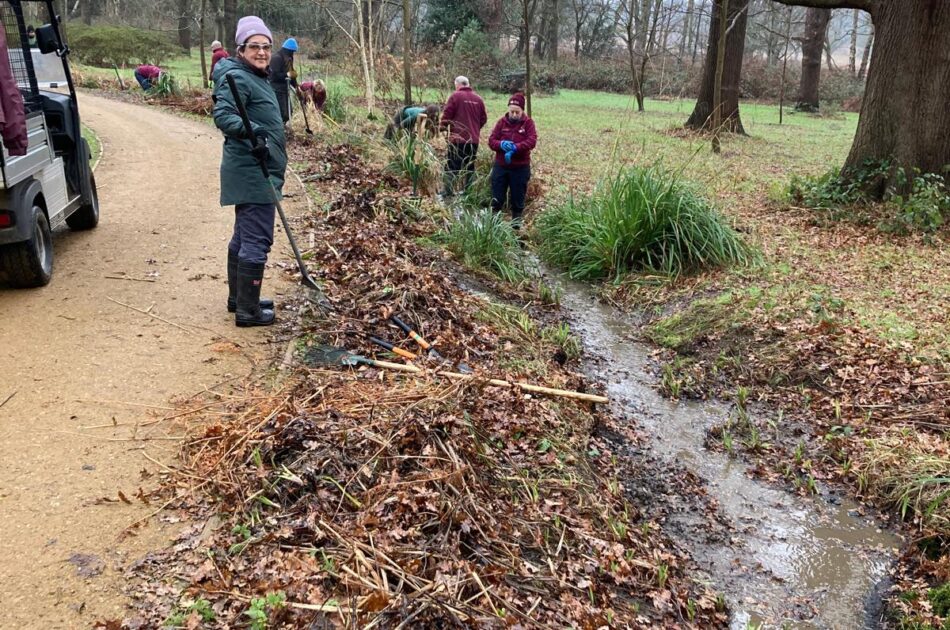
The benefits of this work flow beyond the stream and the biodiversity around it. This photo captures the other vital element of custodianship: community. In this case, the community of Royal Parks Volunteers.
The profound satisfaction of this work isn’t found only in the result, but in the shared act of doing it. There’s a unique, tangible joy in being part of a team that transforms a space in a few short hours (an achievement that would feel overwhelming for one person alone). It’s the power of collective purpose.
In our increasingly isolated world, this social fabric is itself a form of stewardship. Volunteering weaves connections, counters loneliness, and creates a shared sense of place. The laughter over a muddy boot, the quiet camaraderie of working side-by-side, the shared flask of tea and coffee at the end… these moments nurture us as much as our work nurtures the land.
We become custodians not only of the ecosystem but of each other’s well-being, finding purpose and connection through a common goal. It’s a beautiful cycle: gentle work on the environment fosters gentle connections among people, which in turn renews our collective commitment to care.
The power of Naturalistic Planting
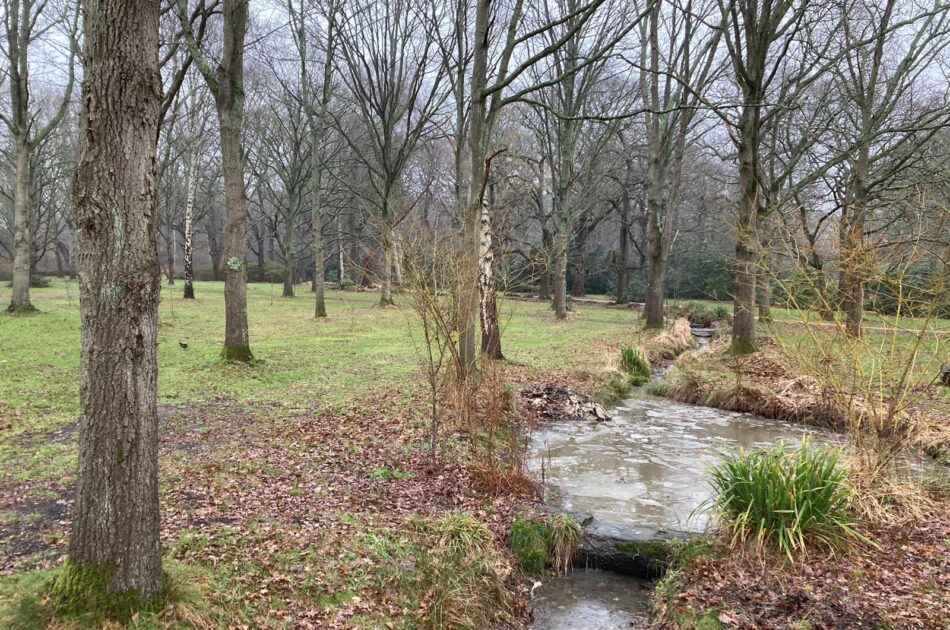
This is naturalistic planting at its best. It requires more knowledge than traditional gardening, not less. It asks us to read the landscape, to understand plant communities, and to know when a tiny nudge can have a profound effect. The goal is a resilient, self-sustaining ecosystem that feels wild and free, yet is subtly guided to be both ecologically vibrant and deeply enjoyable for humans.
We seek out places like this to find solace and wonder. The ethic of custodianship upholds each element of the experience, the tranquil sound of clean water, the complex tapestry of life, and the sense of serene wildness. It is made possible by those who do not dominate nature, but who listen to it and, with great care, lend a helping hand.
The next time you walk through Isabella Plantation and pause by this stream, see it as a conversation. It is a dialogue between natural processes and principled, loving care. The clear water reflects a beautiful truth: that our highest role as stewards of cherished places is not to control, but to curate; not to let go entirely, but to gently hold the space for nature’s greatest performance.