Nature Nurture Garden – Harringay
A Garden to feed the body and soul
Client Profile
A busy sustainability leader and single mother with teenage sons and ageing parents, who renovated her house in Harringay’s sought-after hill.
The modernisation included a superb kitchen and a new layout for family life.
Now, she wants her garden to match the house’s style, ideally with permaculture features.

The Challenges
The north-west garden has generous proportions (approx. 13x12m), yet the family underuses it. The main blockers are:
- Split levels: the garden is divided between a narrow, elongated stone-paved patio area and the planted section, which is 1 metre above ground level. This section is accessible via a narrow set of steps, limiting foot traffic into the green space.
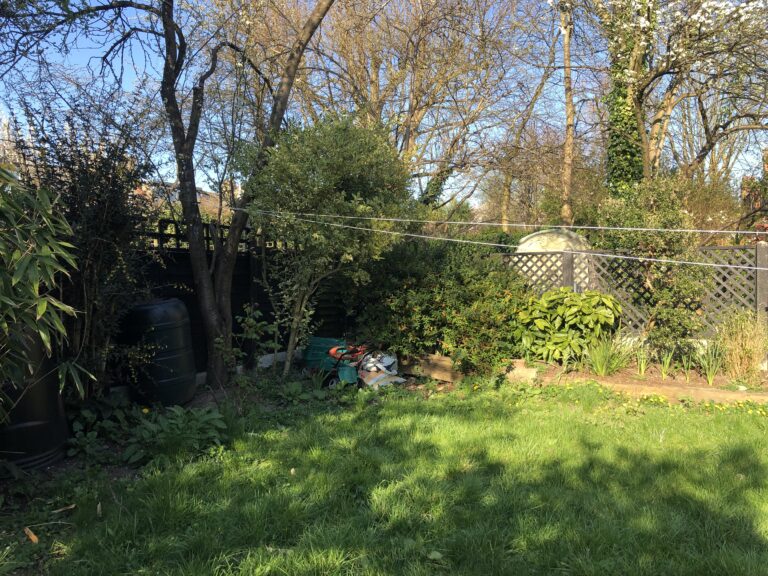
- Understated Planting: there are several established trees, shrubs, and flowers in the borders, but it lacks an exuberant feel. Nothing stands out as extraordinary.
- Furniture layout: the table and sofa are squeezed into the patio, leaving a large empty space in the green area above.
- Lighting: the builders have added lighting to the concrete fence posts. If too many new plants are planted, the lighting will be obscured.
- Energy-draining: The thought of doing any work in the garden feels daunting. The memories of the hard times during the house refurbishment are still overwhelming.
Our Approach: Tier 1 – A Garden for Every Occasion
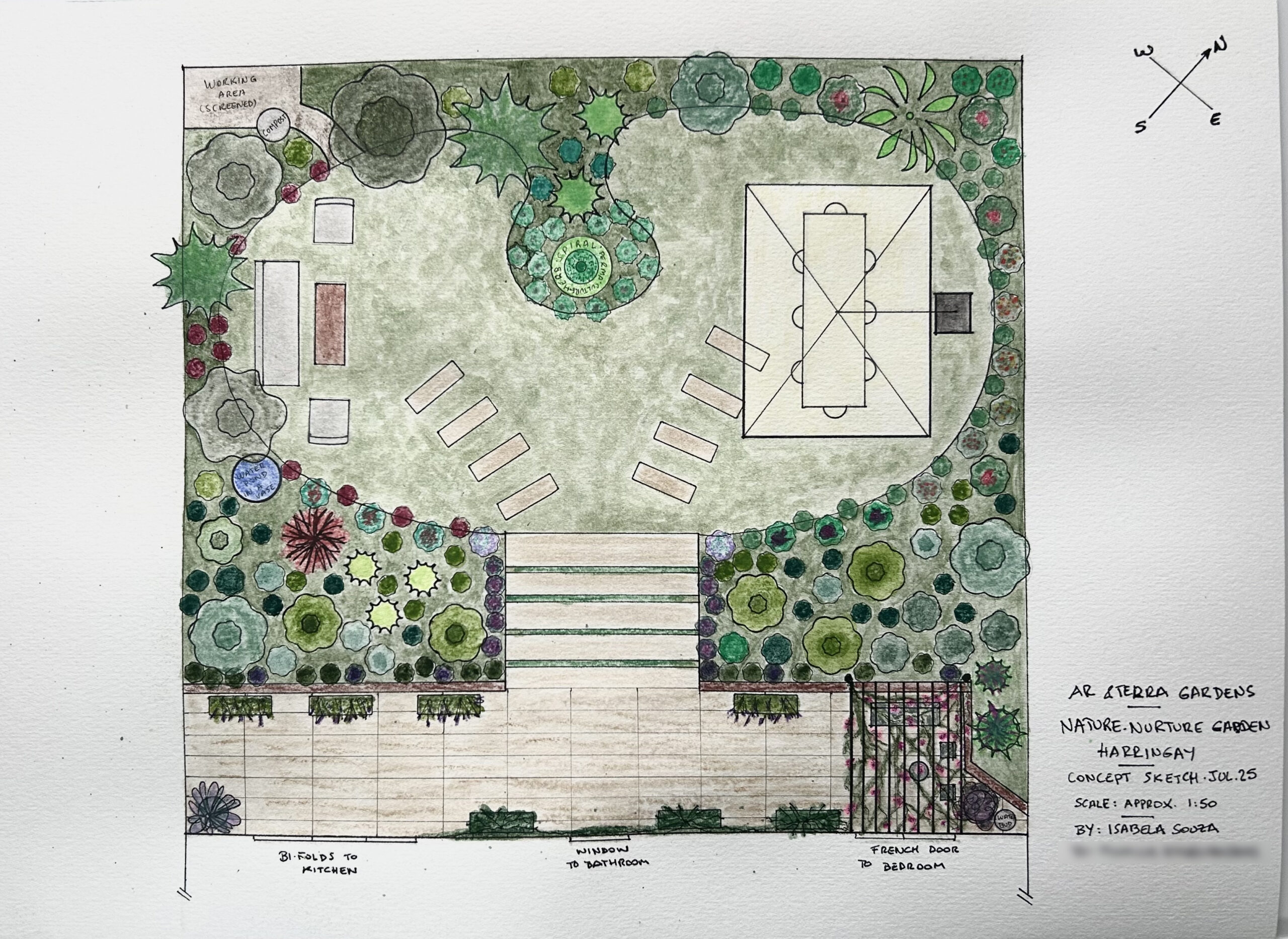
- Dream big: visualising your dream garden will fill you with the energy to make the necessary changes. The sketch provided below is a starting point.
- Start small: focus on the easy changes that will immediately make the garden feel different, such as moving the furniture from the patio to the raised garden (and vice versa).
- Enjoy every step of the journey: embrace slow gardening. Being present and appreciating the garden’s changes over time brings more satisfaction than rushing a garden makeover.
The Wow factor
- 80/20 Rule: Consider filling the borders with up to 80% ornamental grasses, ferns and edibles, then dedicate 20% of the planting for statement plants, such as bamboos, acers, snow banana tree, fruit trees, jasmine and wisteria.
- Beauty in the chaos of nature: Allow whatever seeds are brought by the wind or birds to grow. Do not use pesticides. If necessary, weed the garden manually.
Zoning
- Create nooks with dedicated areas for dining, relaxing, and growing edibles will make the garden a more inviting space.
- Invest in a large parasol that will provide shade as well as privacy.
- Bring the garden closer by adding pots to the patio area, with climbers and trees in pots to create green living walls near the house.
- Add lighting to strategic spots by installing soft lighting to create a magical evening atmosphere, like a permanent holiday retreat.
- Enhance the sense of responsibility and shared ownership by assigning tasks for garden care to everyone. Each teenager could be given a dedicated area or a pot in which they could grow anything they want.
Structural changes
- Widen the steps from the patio to the garden to improve flow from one zone into another.
- Build a wooden pergola outside the bedroom window to create a cosy outdoor space for solitude or a shaded workspace. Deciduous climbers like wisteria shed leaves in autumn and winter, letting in light in colder months, and bloom in spring, providing shade in summer.
- Designate a working area with panels in a shady corner to store tools, compost, and items that need to be kept out of sight.
Low maintenance
- Change the lawn mowing pattern to mow every 2-3 weeks, rather than every week. Adjust the cut height based on the season. In spring/summer, cut higher (5-7 cm) to support flowering plants. In autumn/winter: cut slightly shorter (4 cm) to prevent moss but avoid over-mowing.
- Irrigation: water the plants in pots with a low-pressure drip irrigation system. Some models are connected to a weather forecast and will not turn on if there is a rain forecast. You simply install the system, and it will take care of everything for you.
Improve biodiversity
- Introduce a tapestry lawn: reducing the need for mowing and improving biodiversity. You can just scatter chamomile, common daisy, yarrow and creeping thyme seeds around and see what grows (see links in references).
- Choose climate-resilient plants: popular choices include buddleja davidii, lavender, erysimum, verbena bonariensis, agapanthus, euphorbia, salvia and eryngium.
- Add ornamental grass as ground cover that also provides interest.
- Plant ferns in the shady borders under the tree canopies.
Grow edibles
- Create an herb spiral as the centre point in the sunny part of the garden.
- Plant dwarf fruit trees. You can even grow them in pots!
- Mix edibles and flowers using herbs such as thyme and sage, along with other edibles like strawberries as ground cover, which also add splashes of colour to the flower beds.
Strategic Roadmap
Adopting a phased approach, starting with quick wins, will provide excitement for realising the full garden potential and spread the costs over the years.
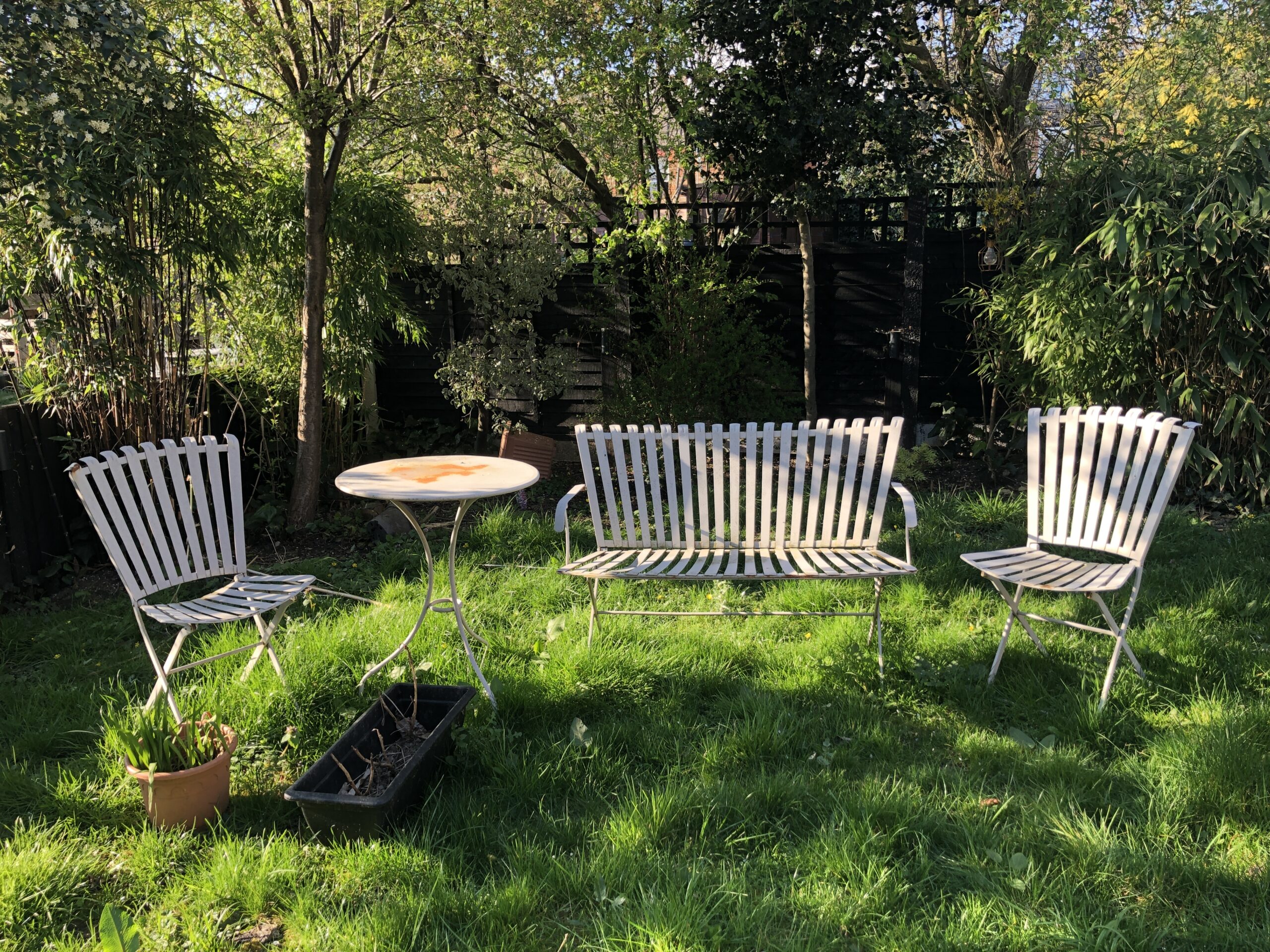
Phase 1: : Start with the quick wins. Move the furniture around, add additional lighting, get a parasol and start sowing the tapestry lawn.
Phase 2: Add pots, plants, and climbers to the patio, and a herb spiral to the garden.
Phase 3: Widen the steps and build a pergola.
Phase 4: Focus on planting according to the new layout.
Client’s Words
“Isabela gave me a clear, doable vision for our garden—one that didn’t feel overwhelming. Just moving the furniture and adding a few lights (thanks to her Amazon list!) completely changed how we use the space. Now it actually feels inviting, and I’m excited to tackle the next steps at my own pace.”
Key Insights
- The garden has enormous potential.
- Dream big, start small.
- Enjoy the journey!