Don’t Judge a Spider by its Colour
Not everything that is colourful is exotic
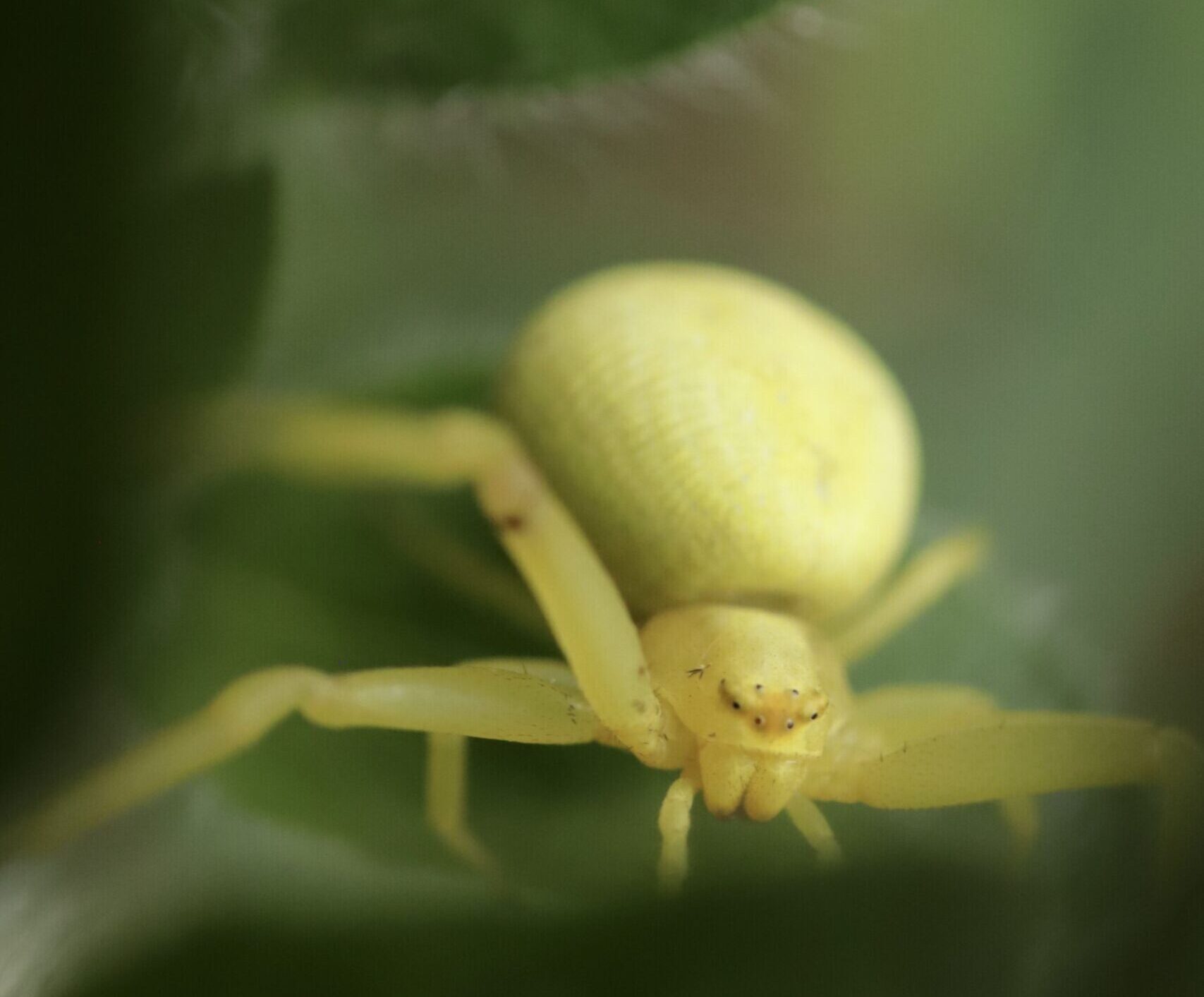
No, the photo of this bright yellow spider behind the dark green leaves was not taken in the Amazon, or some remote location in a foreign country. This is a photo taken in my back garden in South West London in April 2026.
I get it, you might look at this spider and assume it belongs somewhere tropical. But this is a Goldenrod Crab Spider (Misumena vatia), and it is surprisingly common in the south of the UK.
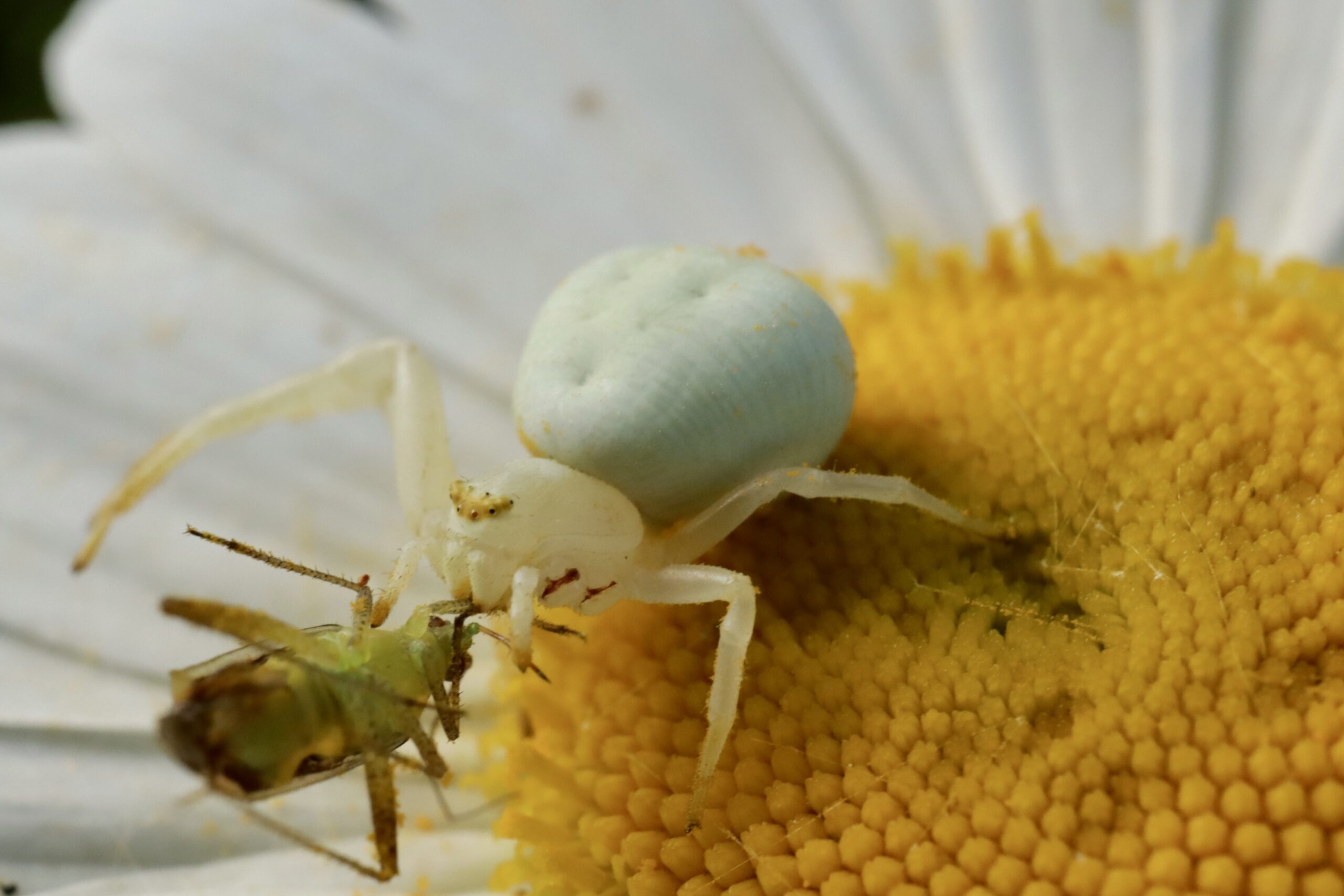
You just have to observe nature around you. I found this spider on an evergreen bugloss blue flower while walking along my garden’s path. The contrast was impossible to miss. This spider is a reminder of why insect-friendly gardens are important (more details at The Wildlife Trusts advice here).
When I moved in, a contractor who called himself a gardener and landscaper looked at the garden – then still the traditional terrace garden with long thin borders in either side and a patch of grass in the middle – and suggested astroturf it. No insects, he said. No spiders, no surprises. I thanked him and showed him the gate.
Smart Use of Energy
The art of not chasing
The spider was doing something I am learning to do: nothing. Not the procrastinating kind, but the ready kind. Her front legs were splayed like a tiny crab’s claws. No web, no frantic movement, no elaborate trap. Just a flower and trust. She does not chase. She does not spin. She simply waits for the right bee to arrive.
How many of us spent years confusing motion with progress? Refreshing the inbox, rearranging the furniture of the day, mistaking busyness for purpose. This spider offers a different instruction: choose your place, be still, trust the timing.
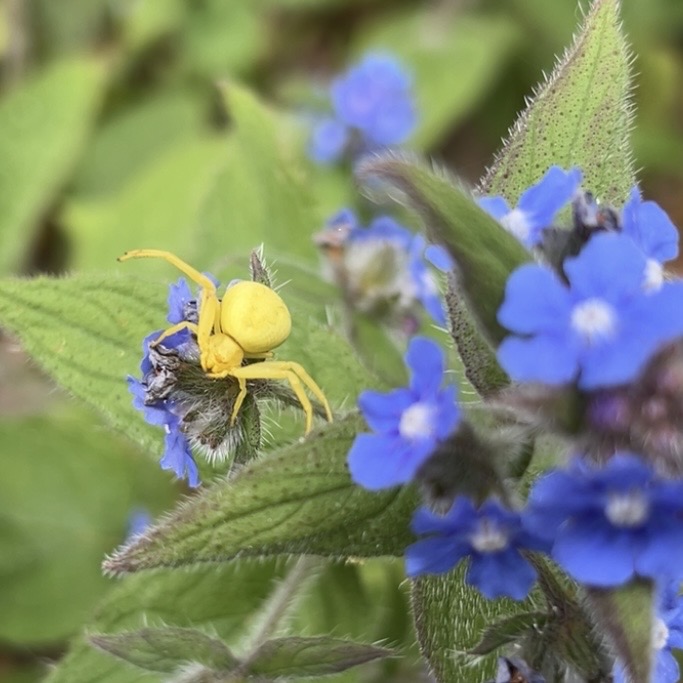
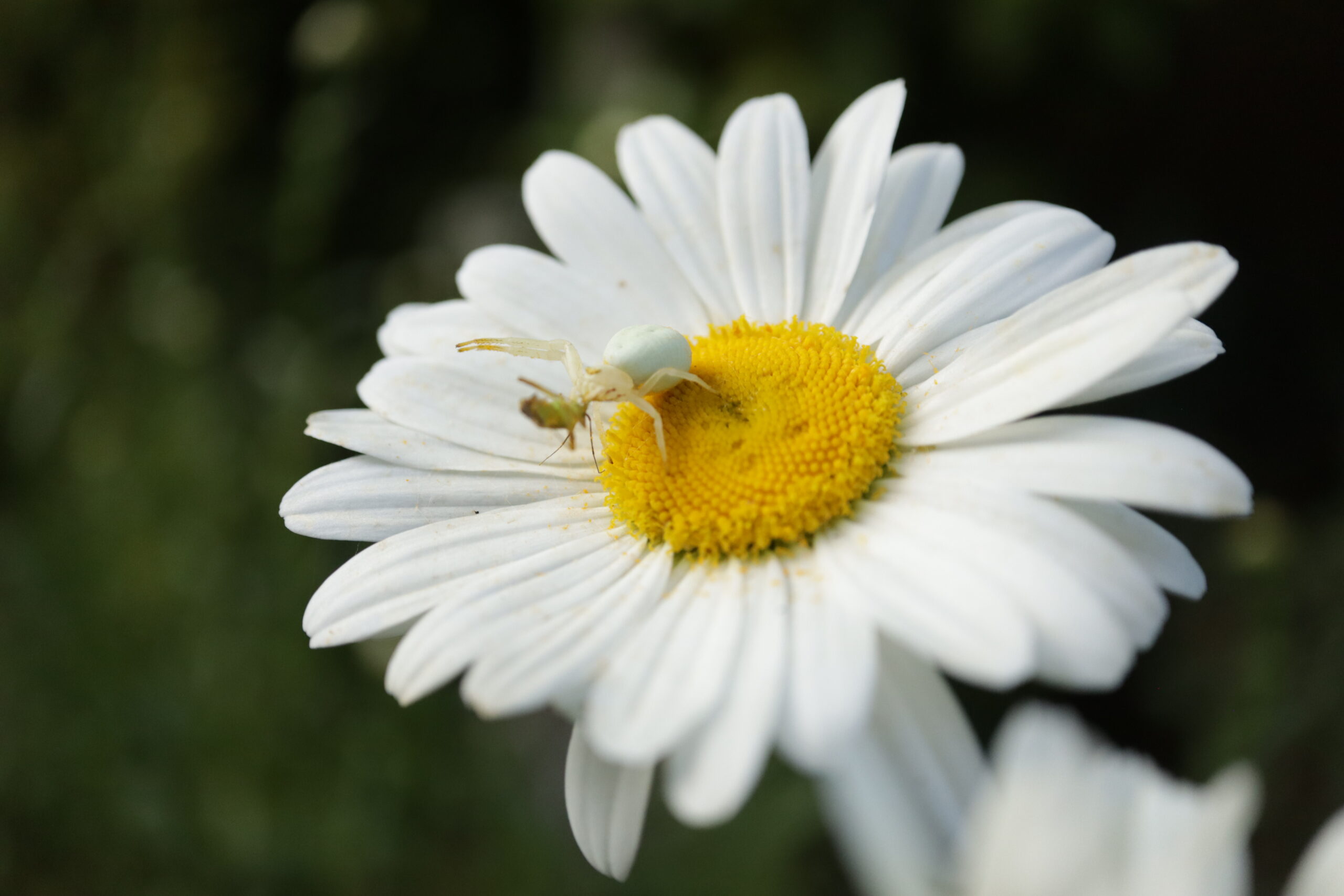
Here is the smartest part. When this spider moves to a white flower, she will slowly turn white over about ten to twenty-five days. She does not fight the new petal or demand that the world change for her convenience. She simply becomes the right colour for where she is. Not surrender, not hiding, but belonging.
Biodiversity by Design
A flourishing ecosystem
Nowadays, evergreen bugloss (green alkanet) is often dismissed as a weed. However, when it was first introduced into the U.K., over 300 years ago, evergreen bugloss was valued as an ornamental plant. The species name ‘sempervirens’ means always green or always flourishing (see more at the RHS webpage dedicated it it!)
In my garden, they are welcomed. So are common daisies, herb robert, and creeping buttercups. These plants are not weeds, not a mess. They are the reason you get surprises like a bright yellow spider showing up on a spring afternoon. A flourishing natural garden is full of this kind of life, and that is precisely its beauty.
Woodland Edge
This approach to gardening draws directly from the woodland edge, one of the richest habitats in any landscape. At the boundary between trees and open ground, you find layers of growth: dappled light, diverse plants, and an abundance of insects and spiders.
A naturalistic garden that mimics this structure – with unkempt edges, self-seeding wildflowers, and toleration of so-called weeds – creates the same conditions. It becomes a refuge for biodiversity, not a display case for human control. The bright yellow spider is not an accident. It is a sign that the garden is working as it should.
Fun facts
The spider is sometimes called a “flower crab spider” because of how it holds its front legs out to the side, waiting to ambush passing bees and hoverflies.
- It does not build a web. It simply picks a flower and waits.
- The female is the one you will notice – she is bright yellow or sometimes white, depending on which flower she is hunting on. She can change colour slowly over a few weeks to match her surroundings.
- The males are darker and much harder to find.
- They are most active from April to June, so this is the perfect time to keep an eye on your flowers.