Context is Everything
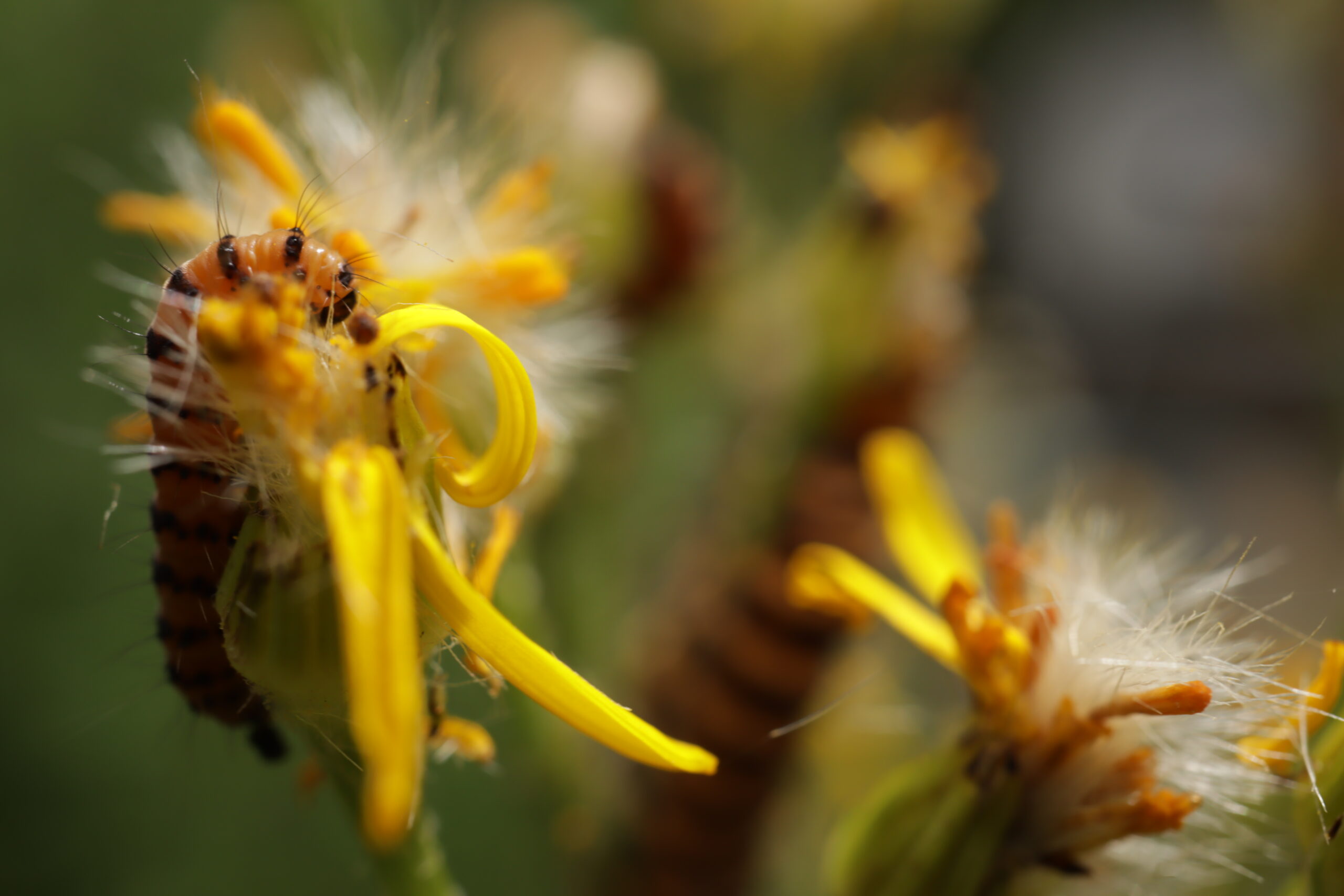
The Cinnabar Caterpillar: A Striking Resident
The real star of the garden right now is the cinnabar moth caterpillar. With their brilliant rings of jet black and bright amber-yellow, these caterpillars are impossible to miss as they cluster along the stems of ragwort. Their vivid colouring is a deliberate warning to predators, signalling that they are highly toxic after absorbing the alkaloids within the plant.
Watching them strip the ragwort leaves down to the bare stem is a fascinating lesson in natural balance. They are voracious eaters, but they are entirely dependent on this specific wildflower to survive and complete their transformation into the equally stunning red-and-black adult moths.
Rethinking the Residential Garden
Nature is the master in my garden
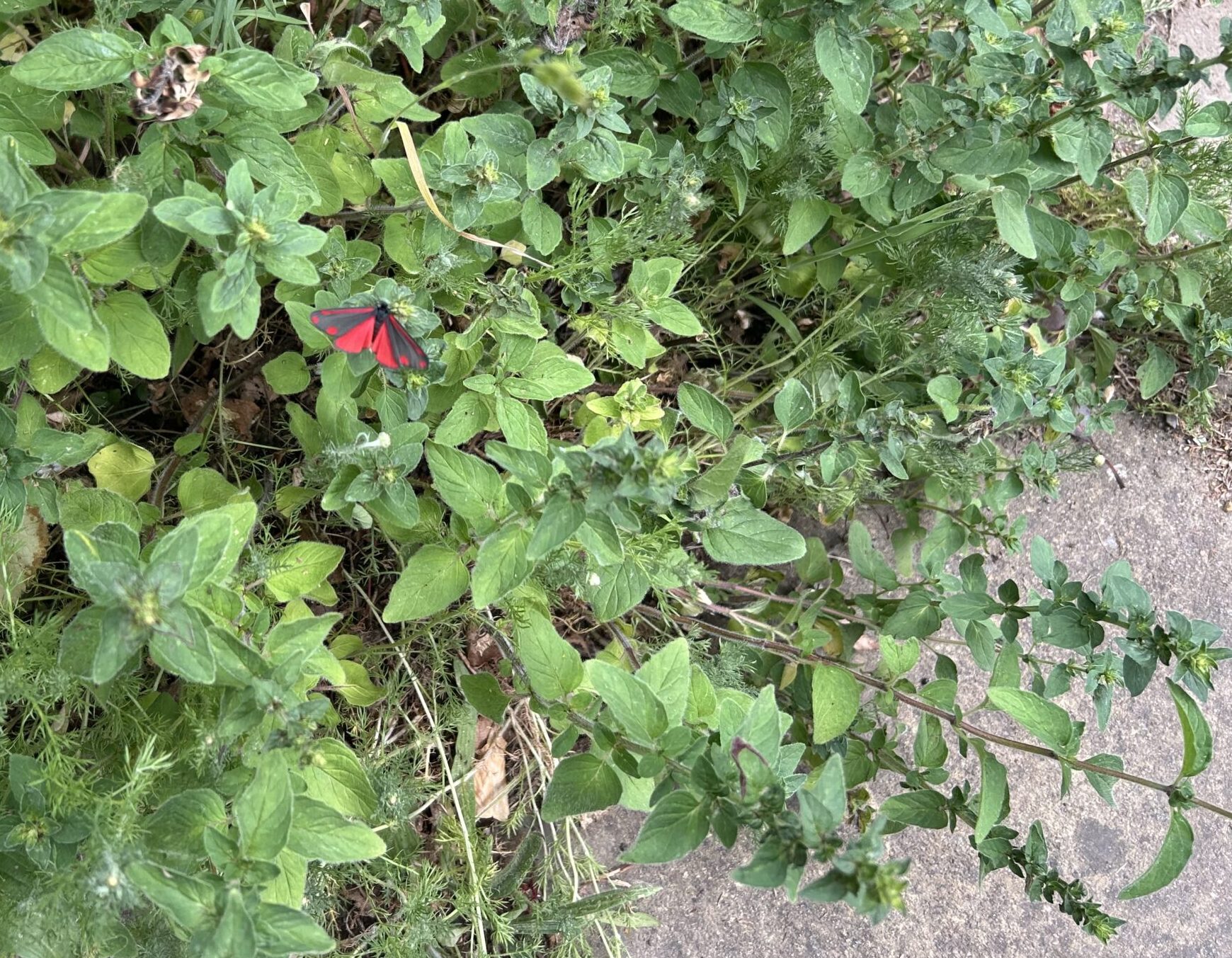
At the moment, my garden feels alive every morning. Stepping outside into the intense July sunshine, there is a quiet joy in seeing a steady movement of moths and butterflies shifting through the dry air. London is experiencing another sweltering heatwave, with temperatures repeatedly climbing well past 30°C. Yet, while much of the traditional landscape is parched, the cinnabar moths are a particular highlight here, fluttering among the greenery.
None of this was explicitly planned. When I redesigned the garden layout, there was no money for plants. I sowed a few seeds and let spontaneous planting take over. By trusting the wind and the birds to bring seeds into the garden, and by choosing to see “weeds” as the vital wildflowers they actually are, biodiversity simply arrived. By allowing nature the space to establish itself, the garden has transformed into a thriving ecosystem that is remarkably resilient to the changing climate.
Climate Change Needs Mindset Change
As summers become hotter and drier, we need a fundamental mindset shift regarding our residential outdoor spaces. The classic, pristine English lawn and delicate, water-heavy borders are simply not built for our future climate. Embracing spontaneous arrivals is not about neglecting a space; it is a conscious choice to welcome plants that are naturally adapted to survive and support local wildlife during extreme weather. When we stop fighting nature and instead invite these resilient native flowers in, our gardens naturally become sanctuaries.
However, ecological conservation rarely works in straight lines because not all spaces, and not all plant communities, are the same.
Reading the landscape
Away from my garden, my volunteer work in Richmond Park involves a completely different approach to the exact same plant. There, we actively pull ragwort out. It sounds contradictory, but the reasoning is entirely down to the specific local environment.
Richmond Park is a Site of Special Scientific Interest (SSSI), and one of the primary reasons for this protective status is its ancient colonies of yellow meadow ants. These are anthills of yellow meadow ants – some 400,000 anthills with many over 200 years old. These ants build distinctive, grassy soil mounds that create a unique microclimate for rare plants and insects. When ragwort grows directly on top of these mounds, its broad leaves block out the sunlight and cast heavy shade, which threatens the survival of the ancient ant colonies beneath.
One Size does Not Fit All
In my garden, the ragwort is a lifeline for the cinnabar moth, thriving in a residential patch where it does no harm. In Richmond Park, it is a threat to a protected, foundational species.
Ultimately, sustainable environmental management is not about blanket rules or doing the same thing everywhere.
One needs to look closely at the specific location, recognising that every plant community behaves differently depending on where it is, and adapting our approach to the context.